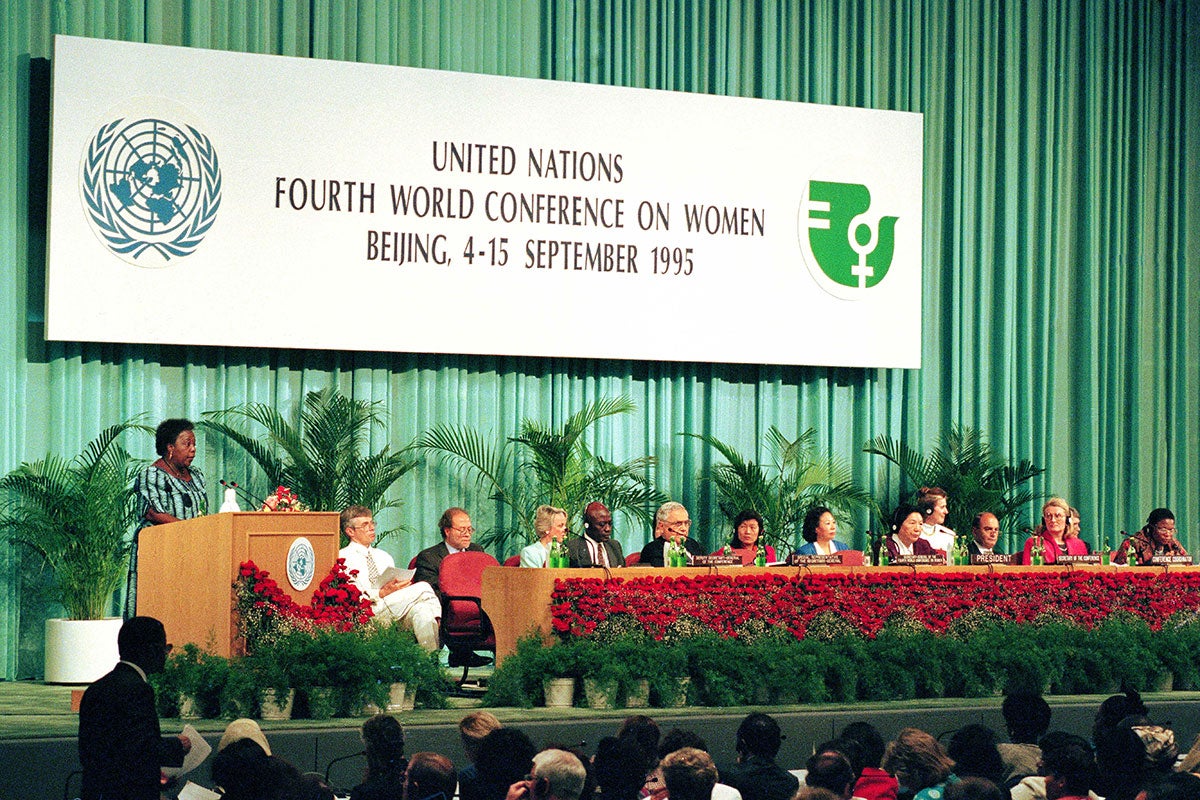
Beijing Platform for Action: A Global Blueprint to Protect Women's Rights
The pursuit of gender equality is not merely a moral imperative; it is a foundational pillar for sustainable development and human progress. At the heart of this global endeavor lies the
Beijing Platform for Action (BPfA), a landmark document forged at the Fourth World Conference on Women in Beijing, China, in 1995. This seminal agreement, alongside the Beijing Declaration, represents the most comprehensive international policy framework ever adopted for women's empowerment and gender equality. It serves as a living blueprint, continually guiding governments, civil society, and international organizations in their efforts to
protect women's rights and ensure a more equitable future for all.
The BPfA is revolutionary in its scope, dissecting the multifaceted challenges women face into 12 critical areas of concern. It moves beyond rhetoric, setting forth strategic objectives and actionable measures to be undertaken by various stakeholders, from national governments to local communities. It also works in tandem with existing human rights instruments like the Convention on the Elimination of All Forms of Discrimination Against Women (CEDAW), reinforcing the legal and moral obligations to eradicate discrimination and achieve substantive equality for women worldwide. Understanding these 12 critical areas is key to appreciating the depth of the global commitment to women's empowerment and the ongoing journey to secure and advance women's fundamental human rights.
The Pillars of Progress: Unpacking the 12 Critical Areas of Concern
The Beijing Platform for Action identifies 12 interconnected areas where significant obstacles impede women's progress and where concerted action is required to
protect women's rights. Addressing these concerns holistically is essential for achieving true gender equality.
- Women and Poverty: Recognizing that poverty disproportionately affects women, limiting their access to resources, opportunities, and decision-making power.
- Insight: Economic empowerment is a cornerstone of women's autonomy. Policies must tackle the root causes of feminized poverty, such as unequal pay, lack of property rights, and limited access to credit.
- Education and Training of Women: Highlighting the fundamental right to education as a catalyst for empowerment, challenging stereotypes, and fostering personal and professional growth.
- Actionable Tip: Support initiatives that remove barriers to girls' education, especially in STEM fields, and provide lifelong learning opportunities for adult women.
- Women and Health: Emphasizing women's right to the highest attainable standard of physical and mental health throughout their lifespan, including sexual and reproductive health.
- Fact: Comprehensive healthcare, including maternal health services and access to family planning, is vital for women's well-being and their ability to participate fully in society.
- Violence against Women: Calling for the elimination of all forms of violence against women, recognizing it as a violation of human rights and a significant impediment to equality.
- Insight: This area underscores the critical need for robust legal frameworks, support services for survivors, and educational campaigns to change societal norms that perpetuate violence.
- Women and Armed Conflict: Addressing the unique and devastating impact of armed conflict on women, including sexual violence, displacement, and loss of livelihood, and advocating for women's role in peacebuilding.
- Analysis: Women are often both victims and powerful agents of change in conflict zones; their voices and leadership are crucial for sustainable peace.
- Women and the Economy: Advocating for women's equal access to economic resources, employment, and decision-making in economic policy, challenging discriminatory practices.
- Tip: Promote policies like paid parental leave, affordable childcare, and equal pay legislation to create an equitable economic landscape.
- Women in Power and Decision-Making: Promoting women's equal participation and representation at all levels of decision-making in political, economic, and public life.
- Insight: Diverse leadership leads to more inclusive policies that better serve the entire population. Quotas and targeted training can accelerate this progress.
- Institutional Mechanisms for the Advancement of Women: Calling for the establishment and strengthening of government bodies and other institutions dedicated to promoting gender equality.
- Fact: Strong national gender machinery is essential for translating international commitments into effective domestic policies and monitoring their implementation.
- Human Rights of Women: Reaffirming that women's rights are human rights and advocating for the full and equal enjoyment by women of all civil, cultural, economic, political, and social rights.
- Analysis: This area serves as an overarching principle, ensuring that all other areas are approached from a human rights perspective.
- Women and the Media: Encouraging media to promote non-stereotyped, balanced, and diverse portrayals of women, challenging harmful norms and stereotypes.
- Tip: Support independent media, media literacy programs, and initiatives that increase women's representation in media ownership, leadership, and content creation.
- Women and the Environment: Recognizing women's critical role in environmental management and the disproportionate impact of environmental degradation and climate change on women.
- Insight: Empowering women as environmental stewards and ensuring their participation in climate action planning leads to more effective and sustainable solutions.
- The Girl Child: Addressing the specific challenges faced by girls, including discrimination, violence, and limited access to education and health, to ensure their full development and human rights.
- Actionable Tip: Invest in programs that end child marriage, female genital mutilation, and ensure girls have equal access to nutrition, healthcare, and education from birth.
UN Women: Driving the Mandate to Protect Women's Rights Globally
The global commitment to gender equality gained a powerful institutional force with the creation of UN Women in July 2010 by the United Nations General Assembly. This entity merged four previously distinct bodies – the Division for the Advancement of Women (DAW), the International Research and Training Institute for the Advancement of Women (INSTRAW), the Office of the Special Adviser on Gender Issues and Advancement of Women (OSAGI), and the United Nations Development Fund for Women (UNIFEM). This consolidation aimed to enhance the UN system's effectiveness and impact in advancing gender equality and
protect women's rights.
UN Women plays several critical roles. It supports inter-governmental bodies, like the Commission on the Status of Women, in formulating global policies, standards, and norms. Furthermore, it assists countries in implementing these standards, providing essential technical and financial support upon request, and fostering robust partnerships with civil society organizations. Crucially, UN Women also holds the entire UN system accountable for its own commitments on gender equality, meticulously monitoring system-wide progress. Its Executive Board, comprised of representatives from 41 countries serving on a rotating basis (10 from Africa, 10 from Asia, 4 from Eastern Europe, 6 from Latin America and the Caribbean, 5 from Western Europe, and 6 from financially contributing countries), ensures diverse global perspectives guide its operations. The leadership, such as that provided by the current Under-Secretary-General for UN Women, Ms. Phumzile Mlambo-Ngcuka, is instrumental in driving this vital mandate forward. To delve deeper into the multifaceted work of this essential organization, explore
How UN Women Advances Global Standards for Gender Equality.
Confronting Modern Challenges: Protecting Women's Rights in the Digital Age
While the Beijing Platform for Action laid out a comprehensive agenda in 1995, new challenges constantly emerge, demanding evolving strategies to
protect women's rights. One of the most pressing contemporary issues is the rise of online gender-based violence. The digital realm, intended as a space for connection and information, has regrettably become a new frontier for harassment, intimidation, and abuse.
Organizations like European Digital Rights (EDRi) highlight the complexities of combating this phenomenon. EDRi acknowledges the intention of proposals like the EU Directive published on March 8, 2022, to tackle online gender-based violence through specific criminalization of acts such as non-consensual sharing of intimate material, cyber-stalking, cyber harassment, and cyber incitement to violence or hatred based on sex or gender. However, EDRi raises important concerns, arguing that a sole focus on criminalization might overlook the deeper structural issues and root causes of gender-based violence. There's also a significant concern about how social media business models, often driven by engagement metrics, can inadvertently amplify violent and misogynistic content.
The challenge lies in crafting effective legal and policy responses that genuinely combat online abuse without undermining fundamental digital rights. Ensuring legal specificity, where criminal law is concrete and not vague, is paramount to prevent overreach and protect freedom of expression. A balanced approach requires not only criminalizing harmful acts but also holding platforms accountable, fostering digital literacy, and addressing the societal inequalities that fuel gender-based violence in both online and offline spaces. For a more detailed examination of these critical discussions, read
Combating Online Gender Violence: EU Directive & Digital Rights.
Conclusion: Reaffirming the Commitment to Gender Equality
The Beijing Platform for Action remains an enduring testament to the global community's commitment to
protect women's rights and achieve gender equality. Its 12 critical areas continue to provide a relevant framework for understanding and addressing the systemic barriers women face. While significant progress has been made in many areas, the journey is far from over. New challenges, like the pervasive nature of online gender-based violence, remind us that the fight for equality is dynamic and requires continuous adaptation, vigilance, and renewed commitment. Organizations like UN Women play an indispensable role in translating global aspirations into tangible change, providing support, guidance, and accountability. Ultimately, the full realization of the Beijing Platform for Action's vision depends on sustained political will, robust resource allocation, and the collective efforts of governments, civil society, and individuals worldwide to ensure that every woman and girl can live free from discrimination and violence, and fully exercise their human rights.